
Table of Contents
- Why Your Words Can Sink Your Claim
- What to Say to Insurance After a Car Accident
- Statements That Hurt You: Fault, Injuries, and Speculation
- The Recorded Statement Insurance Adjuster Trap
- Insurance Adjuster Tactics to Watch For
- Your Digital Footprint Can Be Used Against You
- What to Do After the Conversation
- Frequently Asked Questions
Last Updated: October 2, 2026
Why Your Words Can Sink Your Claim
What you say to an insurance company after a crash can shape your entire claim. A single careless sentence can cut your payout or get your claim denied outright. This guide from Echemendia Law Firm breaks down exactly what not to tell your insurance company, and why it matters.
What to Say to Insurance After a Car Accident
Stick to the facts and nothing more. Give your name, contact details, vehicle info, and a basic description of what happened. Then stop.
The Basics They Actually Need
When you report a car accident, the adjuster needs a few core facts:
- Your name and contact information
- Date, time, and location of the crash
- Vehicle details and license plate
- A short, factual description of the collision
- Names of others involved, if known
How to Answer Without Guessing
Answer only what you know for certain. If you are unsure, say so plainly.
- “I don’t know” is a complete answer.
- “I’m not sure yet” is fine.
- “I’d rather not speculate” protects you.
Adjusters are trained to ask open-ended questions. A simple “I’m not sure” ends the guesswork without hurting your credibility.
Statements That Hurt You: Fault, Injuries, and Speculation
Certain phrases hand the insurer a reason to reduce or deny your claim. The three worst categories are fault, injuries, and speculation.
Admitting Fault or Apologizing
Never say “It was my fault” or “I’m sorry.” Even a casual apology can be read as an admission of fault. Fault in a car accident is often shared and complex. Let the evidence decide, not your nerves.
Downplaying or Guessing at Injuries
Do not say “I’m fine” or “It’s nothing.” Adrenaline hides pain. Soft tissue injuries often show up days later.
- Never guess at the severity of your injuries.
- Never say you were not hurt.
- Never promise you will not file a claim.
Saying “I’m fine” on a recorded call can be used later to argue your injuries are not serious. That single phrase has sunk legitimate claims.
The Recorded Statement Insurance Adjuster Trap
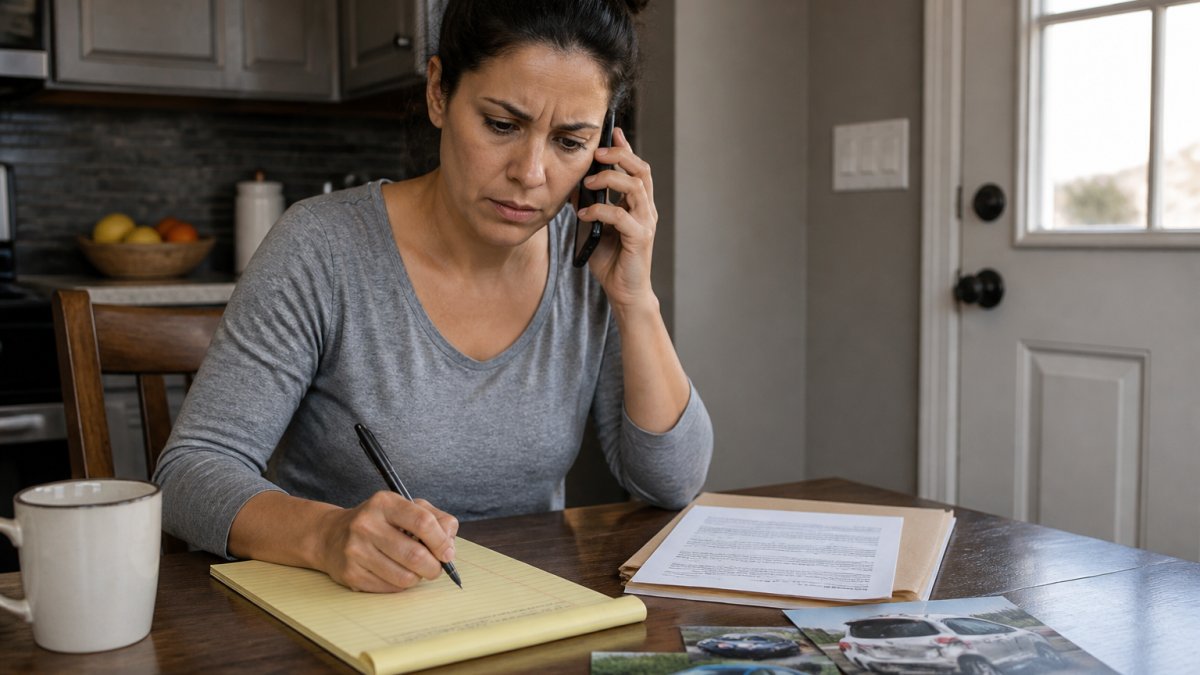
The recorded statement is the single biggest trap in the claims process. The adjuster will ask to record your call “just for accuracy.” You are not required to agree, and the reason is buried in a distinction most people never hear: your own insurer and the other driver’s insurer are not the same audience, and they do not have the same rights against you.
Your Insurer vs. the Other Driver’s Insurer
Your auto policy contains a cooperation clause. It is a contractual duty, and it generally requires you to report the crash, submit a proof of loss, and make yourself reasonably available for an interview. That duty is real. But “cooperate” is not the same as “narrate.” You can satisfy a cooperation clause with a factual, unrecorded interview, or with written answers, in most policies.
How to Decline a Recorded Statement in Writing
Most articles say “don’t give one.” Few explain how to actually decline without looking evasive. A short written response does the job and creates a clean record:
- Confirm receipt of the request in writing, by email or letter.
- State that you are willing to provide the facts of the loss.
- State that you decline to provide a recorded statement at this time.
- Offer a written summary of the facts instead, or offer to make yourself available for an unrecorded interview.
- Ask that all further communication be in writing.
Why the Recording Itself Is the Risk
A recorded call is not a neutral transcript. It can be clipped, excerpted, and played back months later in a context you never intended. A pause before an answer can be edited to sound like hesitation. A casual “I think so” can be replayed as a concession. Once the recording exists, you do not control how it is used.
If you do choose to speak, keep it short and factual, and never guess. “I don’t know” and “I’d rather not speculate” are complete answers. Better yet, let a lawyer handle the call so you never face the adjuster alone.
What to Do If You Already Gave One
If you have already given a recorded statement, do not panic and do not try to “fix” it with a follow-up call. Instead, write down everything you remember saying, note the date and the adjuster’s name, and preserve any notes or emails from that period. A lawyer can review the recording, identify anything the adjuster may try to use, and build the medical and factual record that puts your words in context.
Insurance Adjuster Tactics to Watch For
Adjusters use proven tactics to settle claims fast and cheap. Knowing them keeps you ahead.
Early Settlement Offers and Quick Payouts
A fast offer usually means the adjuster knows your claim is worth more. Once you accept, you cannot reopen it. Medical bills and lost wages often exceed that first number.
- Never accept the first offer.
- Never sign a release without review.
- Never settle before your treatment ends.
Friendly Pressure and Casual Conversation
The adjuster may sound warm and helpful. That is the job. Casual chat is a way to gather details you never meant to share.
Treat every conversation with an adjuster as if it will be read aloud in court. Because it might be.
Your Digital Footprint Can Be Used Against You
None of the top-ranking articles on this topic talk about the data trail your phone leaves behind. That is the gap. Insurance companies do not just check your public posts anymore. They subpoena records, buy data, and pull metadata. What you do on your phone after a crash can be used to argue your injuries are not real, even if you never post a word.
The Data Adjusters Actually Pull
- Geolocation history. Your phone logs where you have been. A trip to a gym, a hiking trail, or a theme park can be paired with a claim of ongoing back pain.
- Fitness app and wearable data. Step counts, heart rate, and workout logs are increasingly requested in discovery. A 10,000-step day is a data point an adjuster will use.
- Photo metadata. The timestamp and location embedded in a photo can contradict a timeline you gave in a statement.
- Rideshare and delivery accounts. A driver who claims they cannot work may be flagged by an account that shows activity.
- Private messages. Even messages sent through a “disappearing” app can be recovered from the other party’s device.
Social Media: The Obvious Trap
Public posts are the easiest evidence to find. A photo of you at a barbecue, a check-in at a concert, or a caption like “feeling great today” can be screenshotted and handed to a claims adjuster within hours. Privacy settings help, but they are not airtight, a friend of a friend can see a post, and a mutual connection can share it.
- Pause all social media posts after a crash.
- Do not post about the accident, your recovery, or your treatment.
- Do not accept friend requests from strangers or new accounts.
- Do not delete old posts, deletion can be treated as spoliation of evidence.
The Right Way to Lock Down Your Accounts
A practical sequence most people never hear:
- Set every account to the most private setting available.
- Turn off location tagging and background location access for social and fitness apps.
- Review your tagged photos and ask friends to remove tags that show physical activity.
- Do not delete anything. Preserve it, and let a lawyer review it first.
- Keep a written log of what you posted and when, so nothing looks hidden later.
Assume anything your phone records, location, steps, photos, messages, could end up in front of an adjuster or a jury. The safest post-crash digital strategy is not to hide, but to stop creating new data and to preserve what already exists.
Why This Matters More Than It Used To
A decade ago, an adjuster had to hire a private investigator to follow a claimant. Today, the same evidence is a records request away. That shift is why digital footprint management belongs on the same list as “don’t apologize” and “don’t give a recorded statement.” It is not paranoia. It is the modern version of the same rule: what you say and do after a crash can be used against your claim.
What to Do After the Conversation
Write down everything. Note the date, the adjuster’s name, and what was said. Keep copies of all letters and emails.
| Situation | What to Avoid | What to Do Instead |
|---|---|---|
| Adjuster asks about fault | “It was my fault” | “I’d rather not speculate” |
| Adjuster asks about injuries | “I’m fine” | “I’m still being evaluated” |
| Request for recorded statement | Agreeing on the spot | “I’ll follow up in writing” |
| Early settlement offer | Signing quickly | Have it reviewed first |
Frequently Asked Questions
Why should I avoid giving a recorded statement to an insurance company?
A recorded statement can be used against you later. Adjusters are trained to ask open-ended questions that may lead you to speculate about fault, minimize your injuries, or misstate facts. Even a small inconsistency between your recorded statement and your medical records or accident report can become the basis for a claim denial or a reduced settlement offer. You are generally not required to give a recorded statement to the other driver’s insurer, and you should speak with an attorney before agreeing to one.
Can an insurance company deny my claim based on what I say?
Yes. Insurers can point to your own words to argue that you admitted fault, exaggerated your injuries, or described a pre-existing condition that explains your symptoms. Statements like ‘I’m fine’ or ‘I didn’t see them’ can be twisted to reduce or deny your claim. Stick to facts you are certain about, avoid guessing, and let documented evidence like the police report and medical records tell the full story. An attorney can help you communicate with the adjuster without creating problems for your claim.
What should I say to an insurance adjuster after a car accident?
Provide only basic facts: your name, contact information, the date and location of the accident, and the vehicles involved. Do not discuss fault, do not speculate about how the crash happened, and do not comment on your injuries beyond confirming you are seeking medical care. If the adjuster asks for a recorded statement or pushes for details, politely decline and say you will follow up after speaking with your attorney. Keep a written log of every conversation, including the adjuster’s name and the date.
How long do insurance investigators watch you after a claim?
There is no fixed timeline, but surveillance is most common in the weeks and months after a claim is filed, especially in personal injury cases with significant damages. Investigators may look for social media posts, photos, or video showing you doing activities you claimed you could not do. Assume anything you post publicly can be found and used to dispute your injuries. Privacy settings help, but they are not foolproof. Avoid posting about the accident, your recovery, or your daily activities until your case resolves.
The claims process is built to test your patience, and insurers count on you giving up. Echemendia Law Firm fights back with over 20 years of experience, thorough investigations into accident circumstances, and legal strategies customized to your case. If an adjuster is pressuring you or your claim was denied, get a free consultation and let us protect your right to fair compensation.